Book your consultation with Ms. (Dr.) Samantha Tross Today Book Now
Robotic Surgery - Cutting-edge technology for precision surgery
Precision Robotic Technology

Robotic Surgery

Cutting-edge robotic-assisted hip and knee replacements with unprecedented precision, accuracy, and improved patient outcomes.

Precision
Sub-millimeter accuracy
Innovation
Mako robotic technology
Results
Better patient outcomes
Pioneering Achievement

Ms. (Dr.) Samantha Tross was the first woman in Europe to perform Mako robotic hip surgery. She provides robotic‑assisted hip and knee replacements with unparalleled precision and expertise.

Robotic Surgery News

How Robotic Surgery Works

Advanced technology enhancing surgical precision and patient outcomes

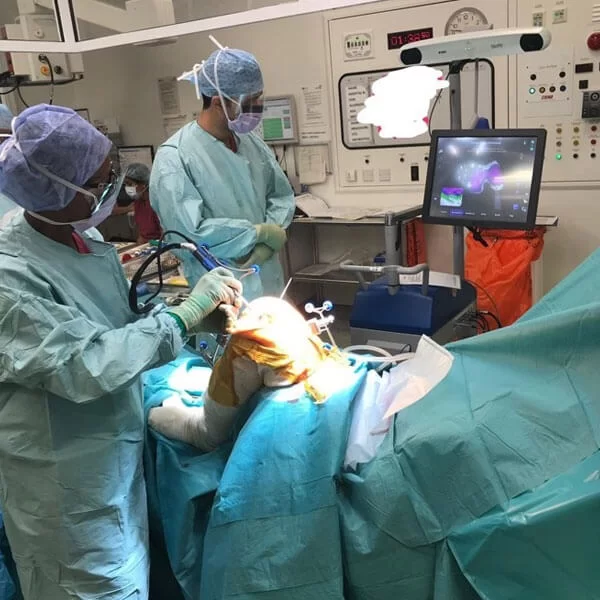
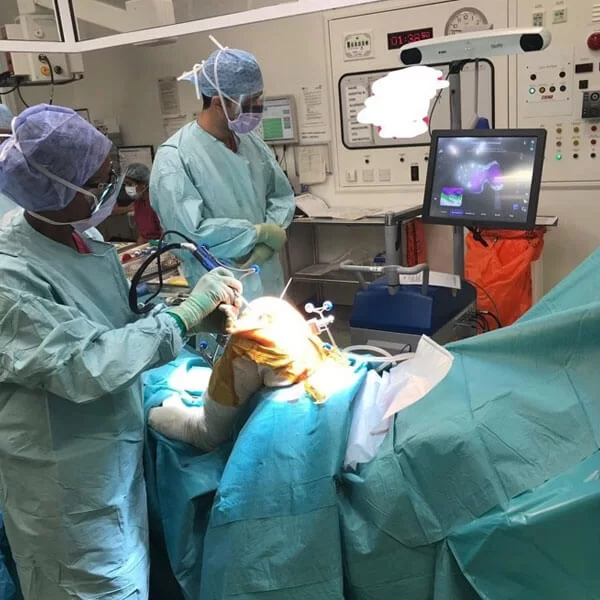
The surgeon remains in control and can override the robot at any time. Data on joint anatomy and limb alignment are fed into the robot's computer to plan optimal prosthesis placement.

Stereotactic pins are placed away from the operation site to allow the robot to track limb position throughout the procedure, ensuring maximum accuracy.

This technology allows for precise bone preparation and implant positioning, potentially leading to better long-term outcomes and reduced complications.

Robotic Surgery in Action

Key Features

  • Surgeon maintains full control throughout the procedure
  • Computer-assisted planning for optimal implant placement
  • Real-time tracking of limb position and alignment
  • Enhanced precision in bone preparation
  • Potential for improved long-term outcomes

Risks of Robotic Surgery

Infection

Risk at pin sites used for tracking

Fracture

Force used to place tracking pins may cause bone fracture

Neurovascular Injury

Rare risk of damage to nerves or blood vessels

Scar Issues

Muscle injury, scar tenderness, abnormal pigmentation or keloid scar formation

Operative Time

Robotic surgery may have longer operative times

Benefits & Considerations

Enhanced Precision

More accurate implant positioning and alignment

Faster Initial Recovery

May lead to quicker initial recovery periods

Complex Cases

Particularly beneficial for joints with significant deformity or abnormal anatomy

Younger Patients

May be advantageous for younger patients needing long‑term implant survival

Evidence

Evidence that robotic surgery is superior to conventional methods is limited; recovery may be faster initially but outcomes at six months are similar

Patient Selection

Determining if robotic surgery is right for you

Ideal Candidates

  • Joints with significant deformity
  • Abnormal anatomy requiring precise correction
  • Younger patients needing long‑term implant survival
  • Patients with complex joint conditions

Consultation Process

Assessment

Ms. (Dr.) Samantha Tross discusses risks and benefits with patients during consultation

Individual Evaluation

Each patient's specific needs and circumstances are carefully considered

Informed Decision

Patients are fully informed about all options before making a decision

Alternative Options

Conventional surgical approaches are also discussed when appropriate

Evidence & Research

Current understanding of robotic surgery outcomes

Current Evidence

  • Evidence that robotic surgery is superior to conventional methods is limited
  • Recovery may be faster initially but outcomes at six months are similar
  • Robotic surgery may have longer operative times and additional risks

Potential Benefits

  • Benefits may outweigh risks for specific patient groups
  • Particularly beneficial for complex cases with deformity
  • May offer advantages for younger patients requiring long-term implant survival

Considering Robotic Surgery?

Book your consultation to discuss if robotic surgery is right for you